
Behind The Shot: Rainy Night Street Photography in Guangzhou
Behind The Shot: Rainy Night Street Photography in Guangzhou
Location: Guangzhou, China (Gangding Station Line 3)
Date: June 28, 2026
Camera: Fujifilm X-Pro3
Lens: Fujinon XF 35mm F2 R WR
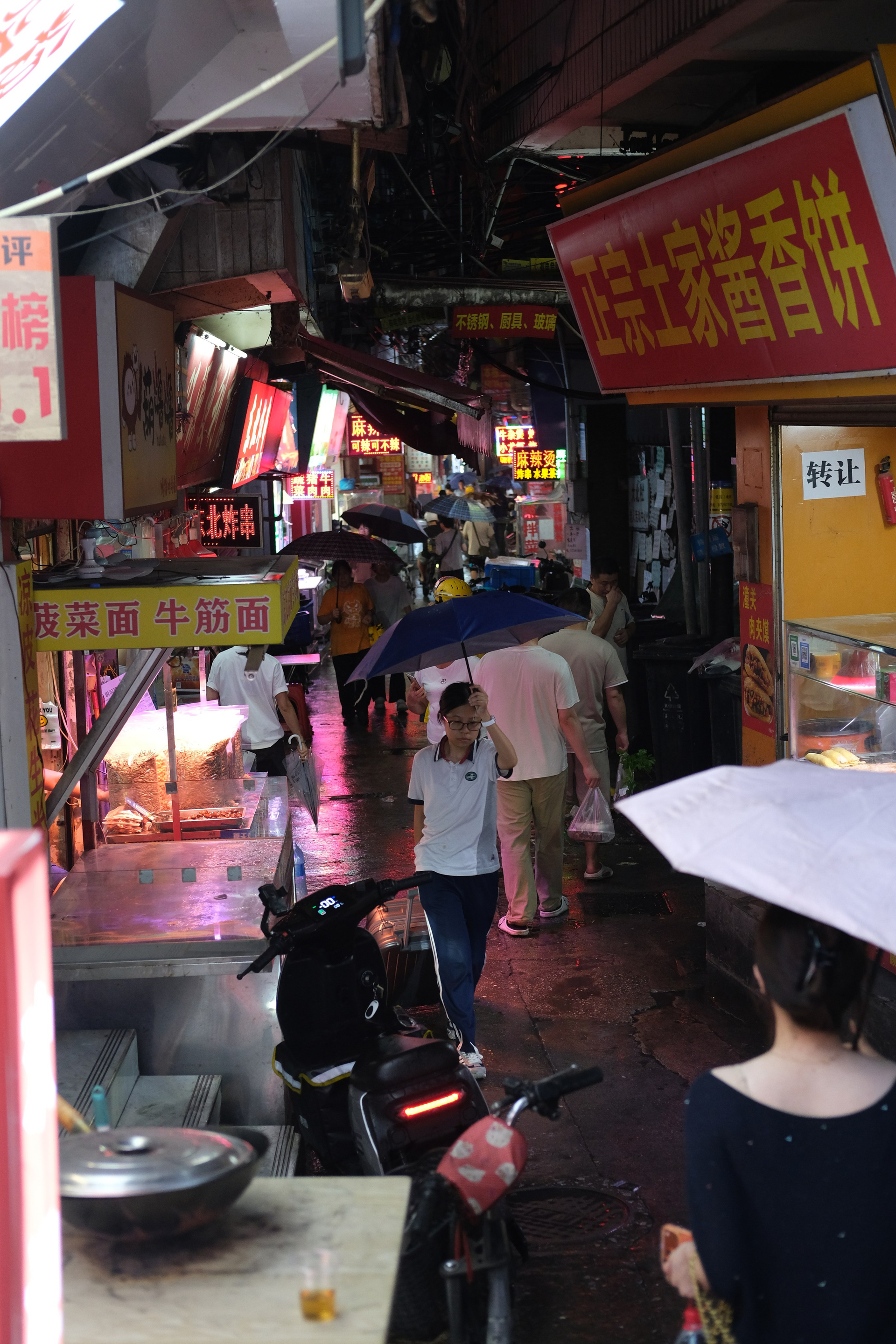
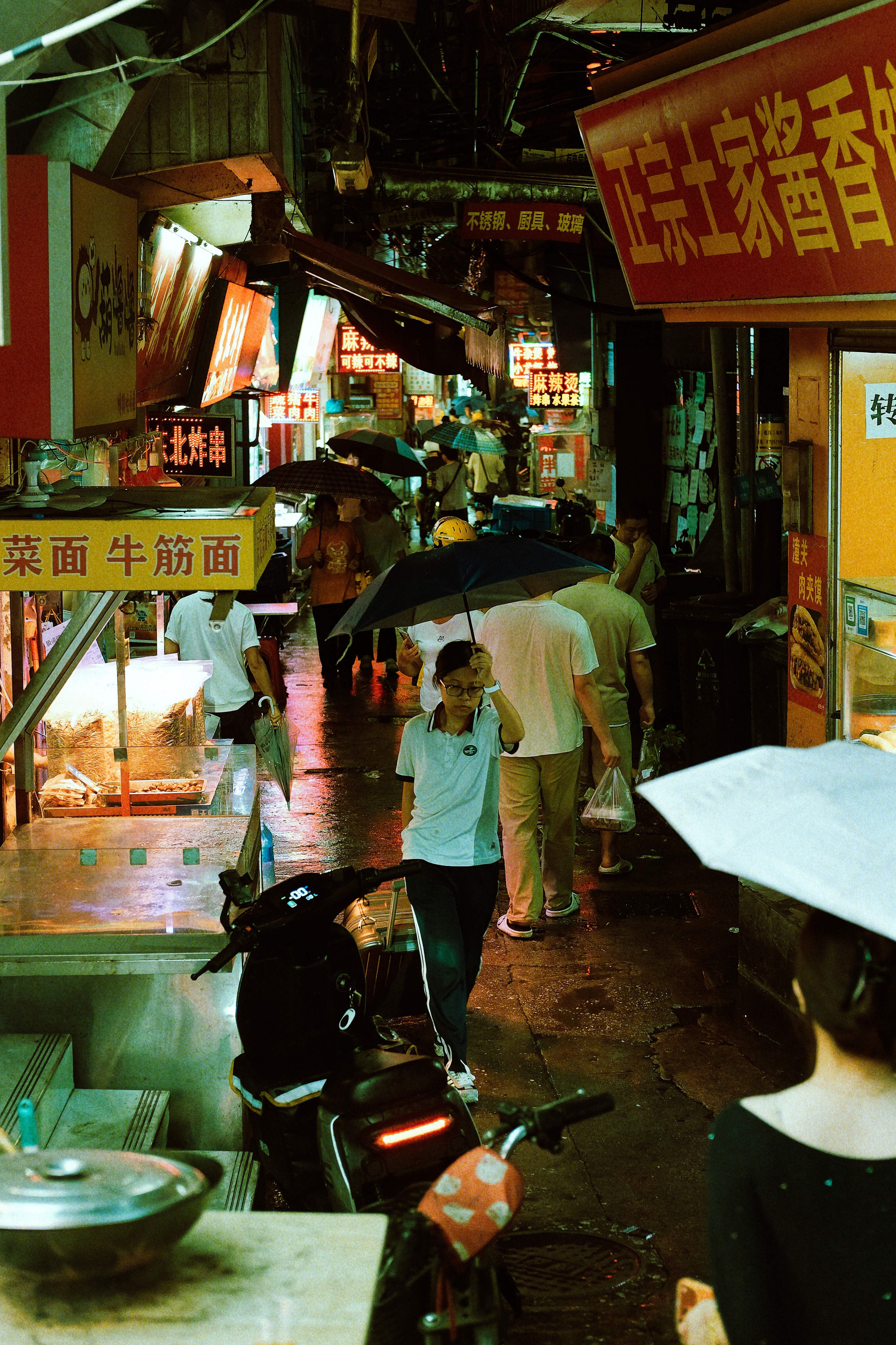

Behind the Shot: Rain After the Storm | Guangzhou Street Photography
Some photographs stay with you because of what they show.
Others stay because they remind you how it felt to be there.
This is one of those photographs.
I made it on June 28, 2026, while wandering through one of Guangzhou’s old market streets after an evening rainstorm. The city had already settled back into its usual rhythm. Shop owners continued serving customers, scooters carefully threaded their way through the narrow alley, and people walked home beneath umbrellas as if nothing unusual had happened.
But rain changes everything.
It slows people down.
It softens noise.
It turns asphalt into a mirror.
And suddenly an ordinary street begins to feel like a film set.
Waiting Without Waiting
People often ask whether I wait for moments or simply find them.
The answer is somewhere in between.
I don’t stand in one place hoping something dramatic will happen. Instead, I keep walking until a place gives me a reason to stop.
This alley did exactly that.
The reflections on the pavement caught my eye first. Then the bright signs. Then the umbrellas moving in different directions.
The final piece arrived a second later.
A schoolboy appeared beneath a dark umbrella, walking directly toward me without noticing the camera.
Nothing about him was extraordinary.
That was exactly the point.
He belonged to the street instead of becoming its subject.
The photograph isn’t about him.
It’s about everything happening around him.
A Street That Breathes
Whenever I photograph cities, I try to avoid reducing them to landmarks.
Every city has famous places.
What interests me are the anonymous streets between them.
Places where people buy dinner, hurry home after work, argue on the phone, wait for the rain to stop, or simply disappear into the crowd.
Those places tell the truth about a city far better than postcards ever can.
This narrow alley exists because thousands of ordinary evenings like this one have happened here.
I was lucky enough to witness one of them.
Why I Left the Frame Almost Untouched
Back home, I experimented with several crops.
Some were tighter.
Some removed the scooter.
Others simplified the composition.
Every version became weaker.
The clutter that first looked distracting slowly revealed itself as the story.
The signs.
The umbrellas.
The food stall.
The scooter waiting in the foreground.
The woman leaving the frame on the right.
Each element carries a small piece of information about the place.
Together they create the feeling of standing there.
Sometimes the hardest editing decision is choosing not to simplify.
Editing What Memory Remembers
People often describe editing as improving a photograph.
I don’t think that’s what editing is.
A RAW file is an accurate record of light.
Memory is something completely different.
When I think about this evening, I don’t remember perfect exposure or neutral colors.
I remember warm light bouncing across wet concrete.
I remember the smell of food drifting from the restaurants.
I remember reflections stretching across the pavement while people quietly continued their lives beneath umbrellas.
That feeling became my reference not the RAW file.
Using DxO PhotoLab, I gently opened the darker areas without destroying the mood. The brightest signs were brought back under control so they would glow instead of dominate the frame. A small amount of local contrast separated the different layers inside the alley while keeping the light soft.
The photograph became less technical and more emotional.
Why I Chose Cross Processed Kodak Elite 100
I rarely think in terms of presets.
I think in terms of atmosphere.
This scene already contained deep greens, warm reds, yellow shop lights and reflections after the rain.
The Cross Processed Kodak Elite 100 rendering exaggerated those relationships just enough to match what I remember seeing.
Not reality.
Memory.
The heavy grain serves the same purpose.
Rainy evenings are never perfectly clean.
Neither should the photograph be.
Looking at the Photograph Today
Cities never stop changing.
A restaurant closes.
A sign disappears.
Someone paints a wall.
A familiar shortcut becomes another construction site.
If I return to this exact alley a few years from now, I will probably find a different place.
That thought has quietly shaped the way I photograph.
I no longer chase spectacular moments.
I look for ordinary evenings that won’t exist forever.
Because one day, without anyone noticing, they become history.
Editing Workflow
Step 1 — Light & Tone
- DxO Smart Lighting: 15
- Highlights: -15
- Midtones: +18
- Shadows: +10
- ClearView Plus: 10
- Contrast: +10
Step 2 — Film Rendering
- DxO Wide Gamut
- Cross Processed Kodak Elite 100
- Rendering Intensity: 100
Step 3 — Lens Corrections
- Lens Softness Correction
- Chromatic Aberration Correction
- Optical Corrections
Step 4 — Geometry
- Horizon Adjustment
- Manual Crop
- Distortion Correction
Step 5 — Film Grain
- Cross Processed Kodak Elite 100
- Grain Intensity: 166
- Grain Size: 8.5
What’s the bottom line?
Every photograph is made twice.
The first time when the shutter is pressed.
The second time when the memory of that moment slowly replaces the technical perfection of the RAW file.
This edit was my attempt to close the distance between those two photographs.
Thank u!

